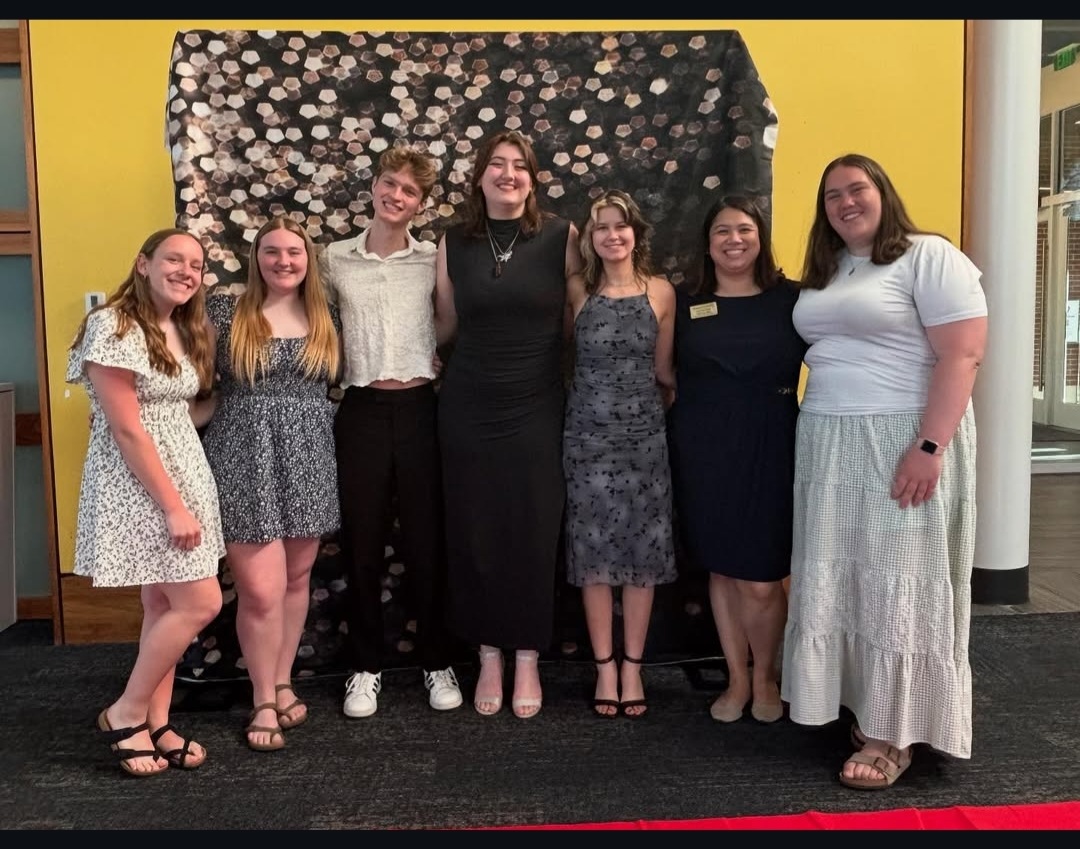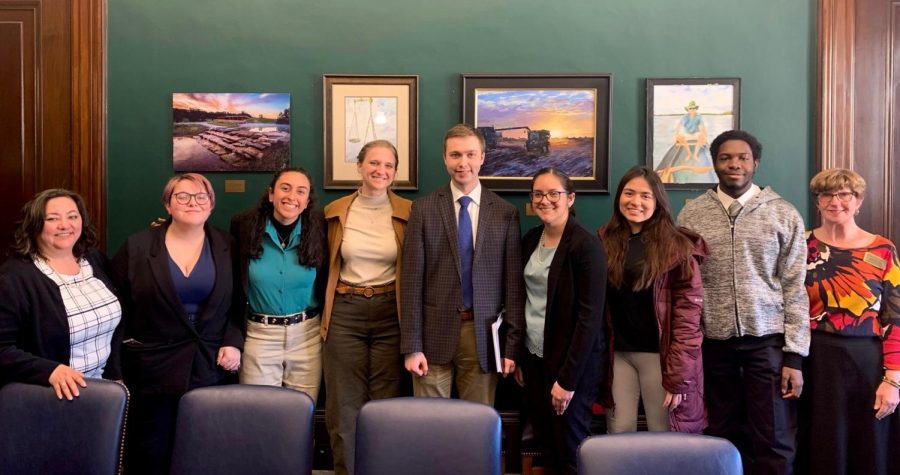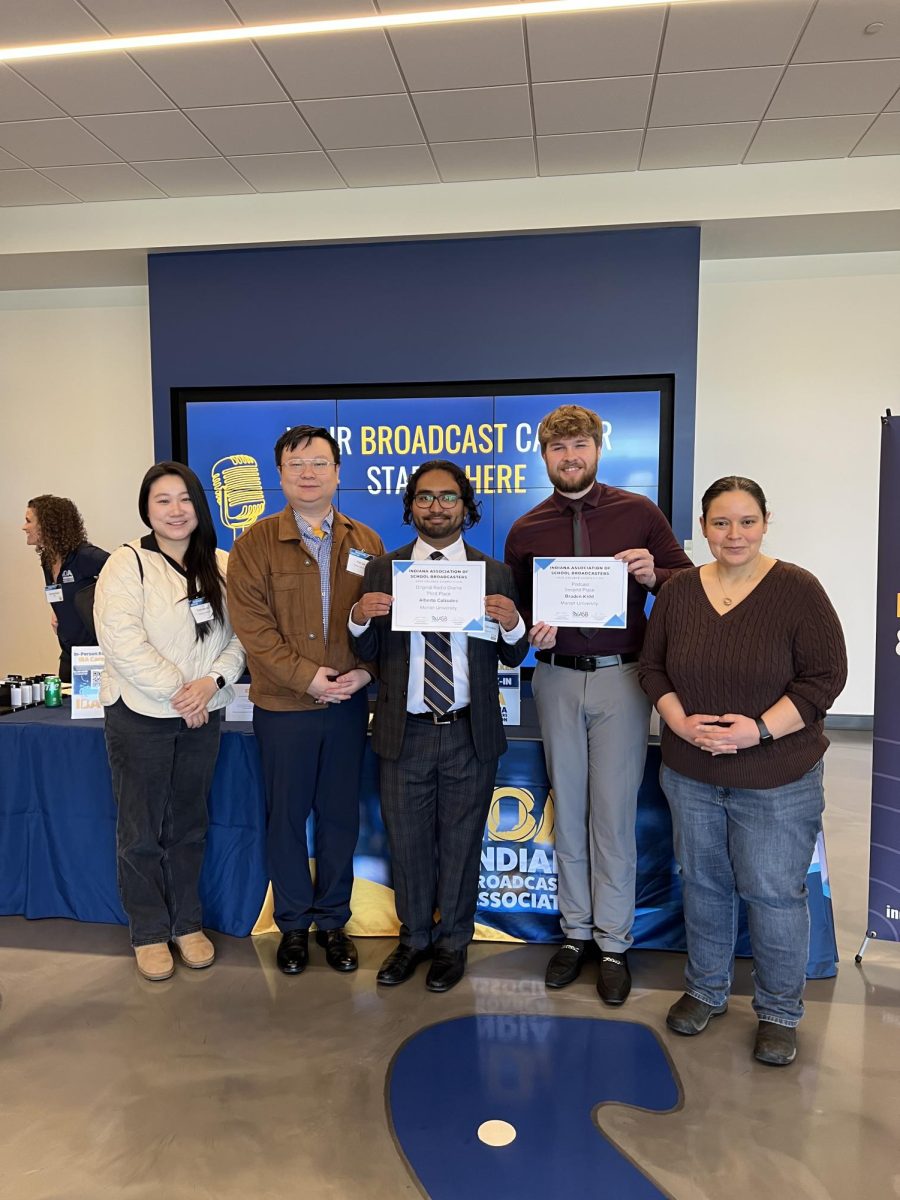



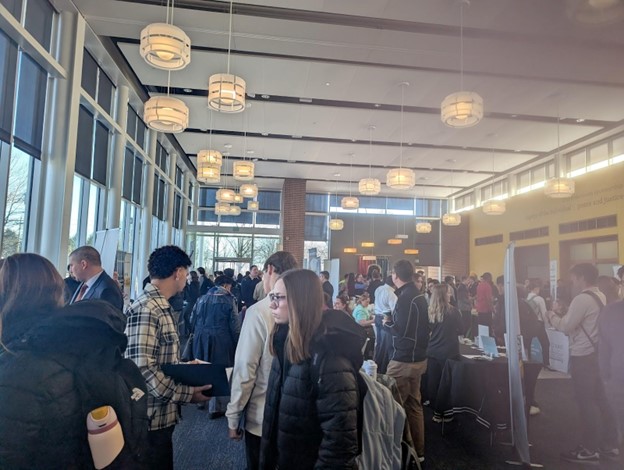





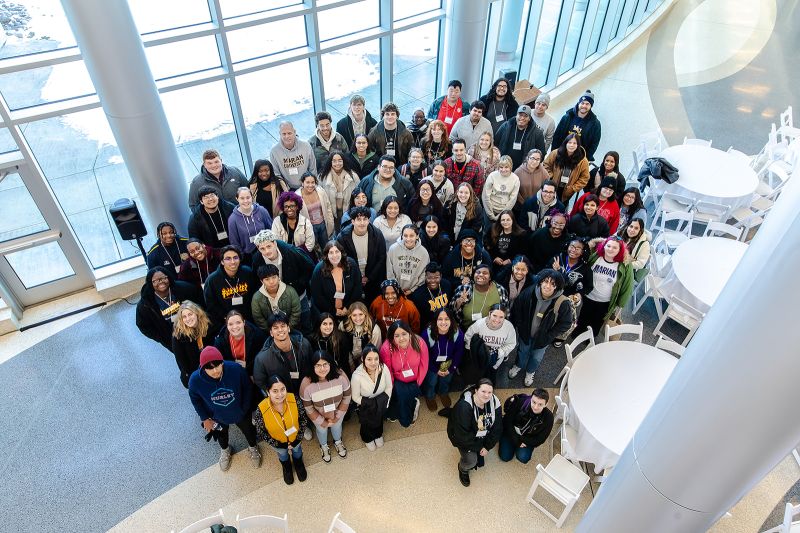




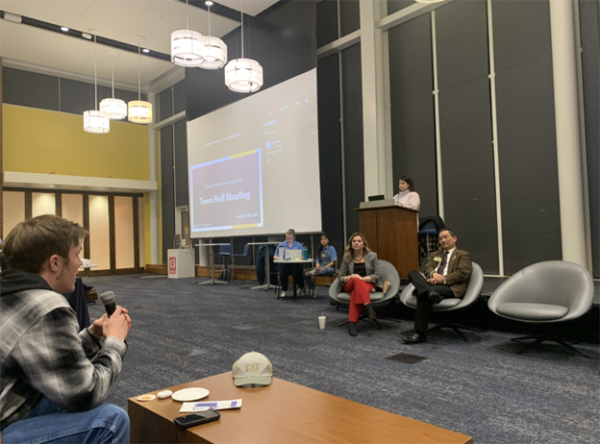
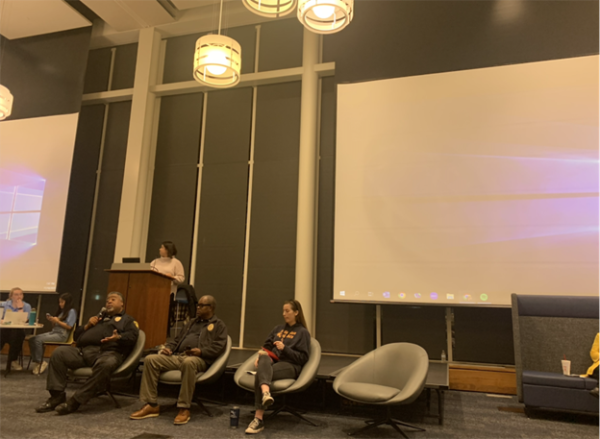
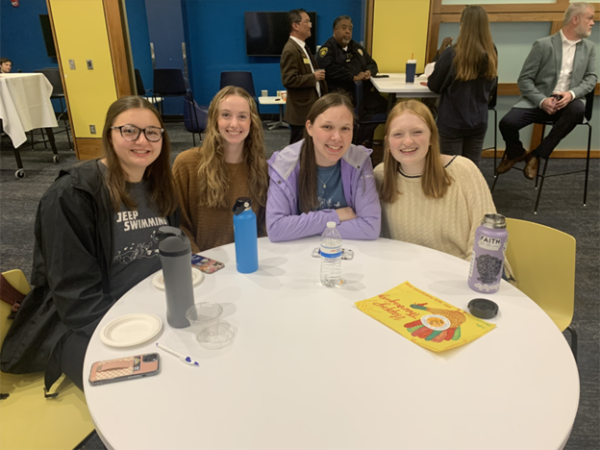
More than 100 members of the Marian University Student Government Association hosted a town hall meeting Tuesday, Nov. 18, in Alumni Hall, providing students with an opportunity to voice concerns directly to campus leadership.
The evening opened with prayer, a tradition at Student Government meetings, honoring the Blessed Mother, Marian University’s namesake. The event then transitioned into a series of panel discussions featuring administrators and campus leaders who addressed topics ranging from academics to residential life and dining services.
Students were able to submit anonymous questions in advance through a Google Form, accessed via QR codes posted around campus. During the event, students could also ask questions publicly by raising their hands, with elected Student Government members circulating microphones throughout the hall.
The first panel focused on academic life and included Dr. Jennifer Plumlee, vice president for student engagement and chief student experience officer; Dr. Binh Tran, chief academic officer and provost; and Ruth Rodgers, senior vice president for public safety and wellness and Title IX coordinator.
Tran explained the process of becoming a
n academic advisor, noting that faculty members must teach at Marian for several years and complete a training module before serving in the role. He also addressed questions regarding faculty
support for internships and employment opportunities.
“Professors can be connections you leverage,” Tran said. “Are they responsible for finding an internship for you? No, but we do have a very robust exchange.”
The panel also discussed addressing bias among peers or faculty and balancing academic responsibilities for student-athletes.
The second panel focused on residential and commuter life and included Maddie Geisse, director of residential and commuter life, and Sgt. John Akers, operations sergeant with Marian University Police Department.
Geisse addressed concerns about residence hall maintenance, explaining that washers and dryers are installed based on available space and serviced approximately once a week. She encouraged students to call the university if maintenance requests submitted through the QR code system remain unresolved.
Akers emphasized Indiana’s Lifeline Law, reminding students that calling MUPD for help involving alcohol-related emergencies will not result in disciplinary or legal consequences.
“Saving lives and doing the right thing is the most important thing,” Akers said.
He also advised students to call MUPD before dialing 911 in emergencies, as campus officers are able to respond more quickly and are familiar with the campus layout. Akers encouraged students to download the Campus Shield safety app.
Additional topics included parking policies, the requirement that students be at least 21 years old to live off campus, and ways to increase attendance at Marian athletic events.
The final panel featured Scott Jayne, food services director and general manager, who explained that Marian’s dining services operate on a four-week menu cycle using an online program, Prima Web, which tracks student dining preferences.
Jayne addressed questions about expanding dining options, including the possibility of creating a Marian version of Indiana University’s Crimson Card to allow dining dollars to be used off campus. He said the university is exploring this technology and hopes to partner with a local pizzeria in the future.
Students also asked about to-go containers and sustainability. Jayne noted that while reusable containers are available for purchase, the use of single-use cups is still under review. He emphasized that Marian maintains an open dining policy, unlike many other institutions.
Junior Senate President Adam Wilson said the event provided meaningful dialogue between students and campus leadership.
“I think tonight went well,” Wilson said. “We had a lot of meaningful conversations and strong turnout from high-level leadership, faculty and staff — something Student Government hasn’t done in a while.”
Senior Lucas Cummings, a student representative for Kappa Delta Pi, echoed the sentiment.
“It’s good to have this opportunity,” Cummings said. “If this happened once or twice a semester, it could help create more cohesion between campus intentions and student desires.”
The town hall concluded with respectful discussion and reflection, reflecting Marian University’s Franciscan spirit and commitment to dialogue, peace and community engagement.